The Death of the Average: How Personalised Learning Finally Kills \"One Size Fits All\"
Excerpt: Our entire education system is built for an imaginary student — the average learner. That student doesn't exist. AI finally lets us teach the children who actually show up.
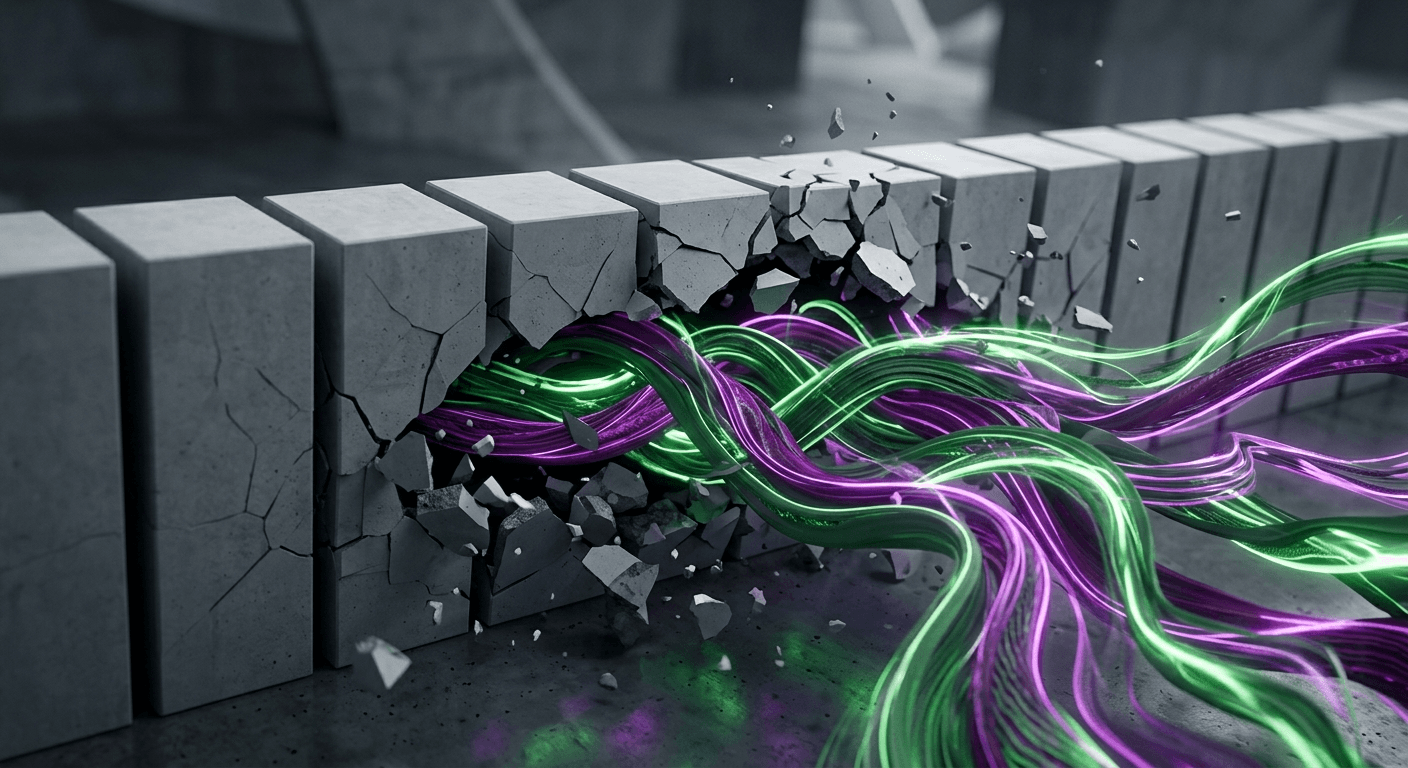
Walk into any classroom in India — government or private, Kota or Kanpur — and you'll see the same quiet fiction being performed: thirty or sixty children, sorted only by age, receiving the same lecture, at the same pace, in the same language, toward the same exam.
The fiction has a name. In 1948, the US Air Force measured hundreds of pilots and discovered something alarming: there was no average pilot. Cockpits designed for the "average" body fit almost nobody. Once planes were redesigned to adjust to individual bodies, accidents plummeted. The average, it turned out, was a statistical ghost — useful for maths, useless for design.
Education never got that memo. Our entire system — batch by age, one syllabus, one pace, one exam — a cockpit built for the average student. And just like the Air Force's cockpits, it fits almost nobody.
The Tyranny of the Batch
The cost of the average-first model isn't abstract. It's visible in every dataset India collects.
By Class 5, ASER reports show, most children cannot read a Class 2 text — while a minority in the same classrooms reads three grades above level. Same class. Same teacher. Same lesson. The gap is created by the system, not despite it. The Class 7 student who never mastered Class 3 fractions doesn't get fractions retaught — the syllabus marches on, and her confusion compounds silently for years. Meanwhile, the child who understood in ten minutes sits bored through the forty-minute re-explanation, learning that school means waiting.
Age-graded batching assumes the one thing we know to be false: that children born in the same year learn the same things at the same speed. Every teacher knows it's false — they see it daily. But one human facing sixty children cannot act on it. Differentiation is what every teacher is trained to do and no teacher has time to do. The batch isn't a pedagogical choice. It's a capacity constraint — Baumol's arithmetic dressed up as curriculum.
So we built elaborate sorting machines around the fiction: exams to rank the batch, streams to separate it, coaching to escape it, and the ultimate sorting ritual — JEE and NEET — where millions of children are measured against a single pace and a single attempt per year. One size fits all; most sizes fit none.
What Personalisation Actually Means (And What It Doesn't)
"One size fits all" dies the moment teaching can bend around the student instead of the student around teaching. Until recently, that required a personal tutor — Bloom's 2 sigma luxury, rationed by wealth. What's changed is that the core tutoring moves are now software:
Pacing that bends. The student proves mastery before moving on — in a day or a month. The calendar stops being the master.
Diagnosis that reaches the root. An AI tutor traces every error back to its source — discovering that today's algebra failure is actually a two-year-old fractions gap — and repairs that, not just the symptom.
Style that adapts. Re-explanation in Hindi or Tamil, at a Class 4 level or an IIT level, with an analogy from cricket or cooking — until it clicks. The tenth re-explanation with the same patience as the first.
Language that matches home. For millions of Indian children, the deepest learning barrier is that school speaks a language their home doesn't. Personalisation in the mother tongue dissolves a barrier no uniform policy ever could.
Paths that diverge. The same Class 8 classroom could legitimately contain a child heading toward mastery of Class 5 foundations and one racing into Class 10 material. Personalisation makes both legitimate — and measurable.
Crucially, personalisation is not "the same video for everyone, watched alone." That was edtech's first mistake. Nor is it algorithmic filter bubbles for children. It is adaptive mastery — the student's understanding, not the institution's timetable, becomes the organising unit.
Why the End of "One Size" Also Ends a Sort of Injustice
The deepest cost of average-first education isn't academic — it's moral. It quietly declares that children who don't fit the pace are defective: the slow ones labelled weak, the fast ones labelled restless, the off-pace ones channelled into the humiliating second-class tracks of the system.
But the Air Force taught us the opposite: when designs adjust to individuals, "defective" people turn out to have been perfectly normal all along. The child "bad at maths" was, very often, just bad at that explanation, at that speed, in that language. Personalisation doesn't just raise scores — it stops manufacturing failure and then blaming the failures for it.
The Honest Caveats
Three warnings before the eulogy is complete.
First, personalisation without relationships hollows out. A fully adaptive path with no human who knows the child produces compliance, not growth. The right model pairs the adaptive machine with a mentor who sets goals, notices moods, and believes in the child.
Second, personalisation can become a tracking machine. If the algorithm prematurely decides what a child is "capable of," we've rebuilt streaming with better maths. Personalised systems must keep pathways open and expectations high — adapt support, never ambition.
Third, the exam system still lives in 1950. A personalised learning journey ending in a single high-stakes, single-attempt exam is a custom key opening a mass-produced lock. Assessment reform — multiple attempts, mastery-based certification, CUET-style flexibility done well — must move in step, or personalisation stays trapped at the classroom door.
The Bottom Line
"One size fits all" was never a philosophy. It was a confession — an admission that we lacked the capacity to do better, so we taught the ghost of the average and asked real children to squeeze themselves into it.
The capacity constraint is now broken. Adaptive mastery, root-cause diagnosis, language-matched explanation, and pace that bends to the learner are no longer a tutor-per-child fantasy; they're a budget line. India — with its vast learning gaps inside every single classroom — has more to gain from the death of the average than any nation on Earth.
The Air Force fixed its cockpits seventy-five years ago. Education's turn has finally come.
There was never an average student.
There were only systems too rigid to see the children in front of them.


© VidyaShift 2026

Where Learning Becomes Opportunity.
An AI-native learning-to-employment company.