Meeting the 50% GER Ambition: Scaling Personalization for India's Structural Education Reset
Excerpt: India wants half its youth in higher education by 2035 — adding the equivalent of Australia's entire population to its campuses. The old model can't count that high. The only arithmetic that works is personalization at population scale: the same intelligence layer, aimed at a nation.
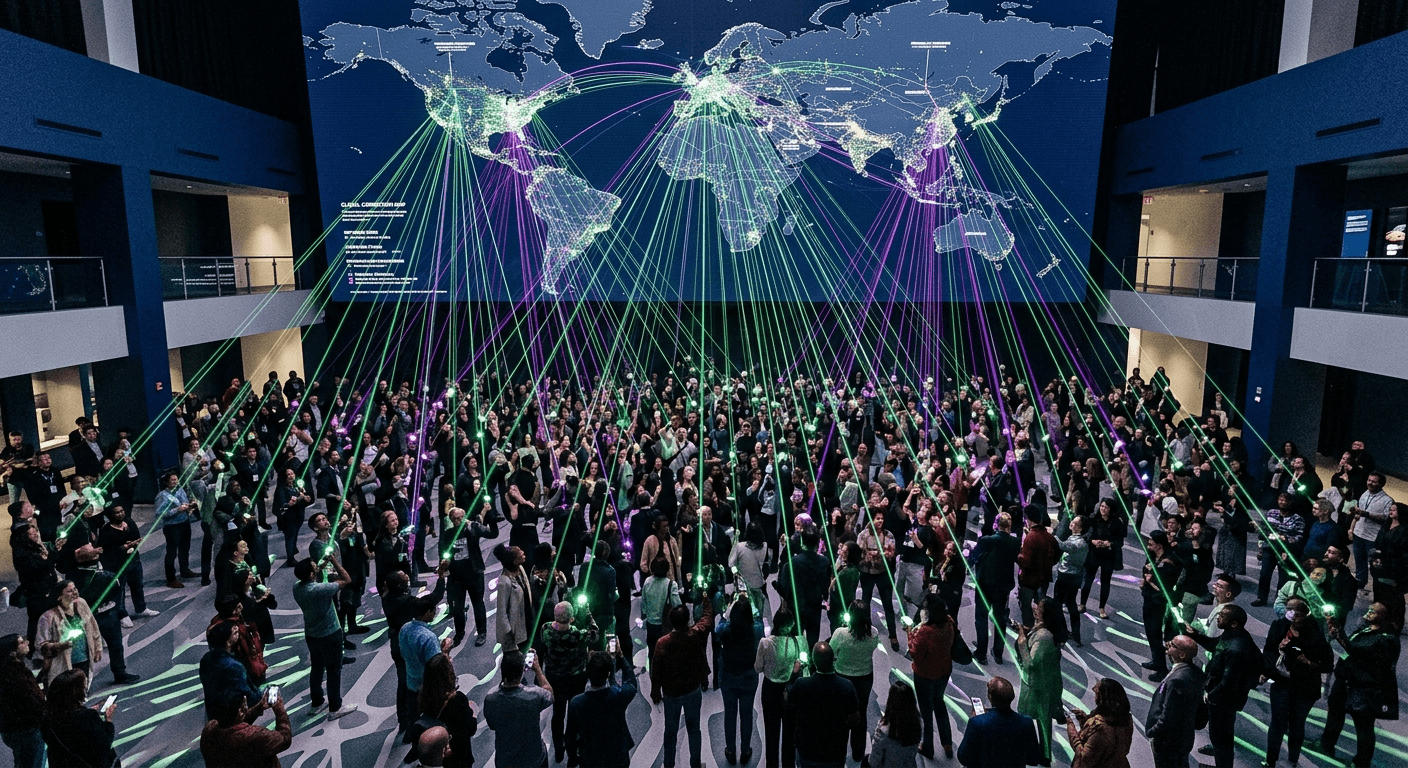
In 2020, India's National Education Policy set a target that looks, on inspection, like an arithmetic impossibility:
Raise the Gross Enrolment Ratio in higher education to 50% by 2035 — from roughly 28% at the time of writing. Given demographic projections, that means absorbing something on the order of fifteen crore additional learners into higher education within a fifteen-year window. For scale: that is adding the entire population of the world's tenth-largest educational system to a system already the largest, most unequal, and most capacity-strained on Earth.
Run the numbers through the traditional delivery model and the impossibility is immediate. At the sixty-students-per-professor ratio from earlier in this series, fifteen crore additional learners require tens of lakhs of new quality faculty — India currently produces a fraction of that, and a fraction of those are good. Physical campuses at current specifications would consume decades and capital the sector has never seen. And the existing system already can't serve the learners it has: the distressed colleges, the vacant-seat churn, the employability gap — all documented earlier in this series — are symptoms of a model at current scale, failing at quality, before doubling.
The conclusion the arithmetic forces is structural, not incremental: India cannot personal-scale its way to 50% GER, and it cannot mass-scale its way to a quality education. The only viable path is the one this entire series has been building — personalization engineered for population scale. The intelligence layer was designed, essay by essay, for exactly this reset. Now assemble it as a national delivery architecture.
Why the Old Model Fails at the New Number
Three structural walls stand between India and the 50% target, and each is a wall the traditional model cannot climb by design:
The capacity wall. Faculty supply, campus infrastructure, and accredited institutions grow linearly at best; the GER target demands exponential absorption. Every linear-input system fails an exponential-demand curve — the only question is when.
The heterogeneity wall. The fifteen crore new learners are not the urban, exam-sorted cohort the current system was built for. They are working adults who cannot attend daytime campus. First-generation learners whose families have no map of higher education. Learners from vernacular-medium schooling entering English-dominated curricula. Learners with capabilities that a Class 12 marksheet has never represented and often misrepresents. The current system's uniform delivery isn't merely strained by this diversity — it is defeated by it, because its unit of service (the batch, the semester, the fixed curriculum) assumes a uniform learner who increasingly does not exist.
The equity wall. Scale without personalization is how inequality compounds. Uniform delivery on a diverse population sorts by prior advantage: those with strong schooling, English, devices, and family guidance absorb the content; everyone else is failed and blamed. A 50% GER achieved by pushing fifteen crore learners through uniform quality would produce 50% enrolment and a fraction of that in outcome — target met, mission lost.
Notice what all three walls have in common: each is a consequence of the system's inability to treat learners individually at scale. Which means the solution isn't more of the old model, faster. It's a different model — the one this series has assembled.
The Architecture: Every Intervention, Now at National Scale
Re-read this series' stack as a national GER machine, and the pieces lock together with uncanny precision:
AI tutors carry the first line of instruction — for everyone. The faculty-leverage essay showed one professor serving hundreds through the augmentation stack. Multiply across the system: the fifteen crore learners who cannot be paired with quality human faculty can be paired with a quality AI tutor — multilingual, infinitely patient, available at 11 PM to the working learner the daytime campus excludes. Language, the single largest equity barrier in Indian higher education, dissolves as a constraint: the same content, served in the learner's own tongue, natively.
The capability graph admits and orients the new learners. Heterogeneity at this scale breaks fixed entry requirements — millions of capable learners hold no clean Class 12 pathway. The verified-assessment layer admits them by demonstrated capability instead of paperwork, and maps their actual starting point so the learning path begins where they are, not where the syllabus assumes. For the first-generation learner with no family map, the graph also becomes the guidance system — showing the destination, the route, and the progress, which is precisely the scaffolding that middle-class families have always provided privately.
The modular, fast-cycle curriculum serves the working learner. Fifteen crore additional learners cannot consume four-year monolithic degrees — most need laddered credentials alongside work: the certificate, then the diploma, then the degree, in the ABC/NEP credit architecture that already legalises this. The two-speed curriculum and 20-hour challenge loops make each rung short, outcome-bearing, and stackable. Higher education stops being a life event requiring a life pause, and becomes a lifelong ladder — which is the only shape that fits the actual lives of the learners the 50% target describes.
The at-risk and daily-support layers prevent the attrition that would sink the target. Here is the quiet arithmetic that decides everything: GER targets enrolment, but a system that enrols millions and loses a third of them to silent dropout has failed while meeting its number. At this scale, the early-warning dashboard and structured daily support are not premium features — they are the retention infrastructure of a national mission. The machine watches every learner; the flags route to mentors; the micro-interventions hold the thread daily. The designs already exist in this series; the GER target is the reason they must run for everyone.
Practitioner hybrids and outcome intelligence keep quality honest at scale. Massification's historical failure mode is quality collapse — degrees without worth. The practitioner-capture layer and hiring-verified evidence keep the expanded system relevant, and outcome transparency keeps it accountable: a 50% GER worth having is measured in capabilities and placements, not enrolment certificates.
What the Institution Becomes in the Reset
The structural reset redistributes roles across the system. Physical campuses stop being the unit of delivery and become the unit of high-value human work — labs, collaborations, mentoring, the moments that need bodies and presence. Faculty stop being the bottleneck resource rationed at sixty students and become the augmented architects and mentors of the leverage essay. The state's role shifts from funding bricks to provisioning rails — the AI infrastructure, the assessment standards, the data governance — in the same way India's digital public infrastructure (Aadhaar, UPI, DigiLocker) provisioned rails and let private innovation ride them. NEP 2020 already wrote this permission slip: multiple exits, credit accumulation, online delivery, internationalisation. What remains is the build.
And the institutions that move first gain the historic advantage: the distressed-college turnaround, the intelligence-cycle compounding, the outcome-backed brand — every earlier essay's play, now executed against the largest expansion of education demand in human history. The 50% target is not a burden on well-run institutions. It is their market.
The Honest Caveats
First, infrastructure inequity is the binding constraint. Personalization runs on connectivity and devices, and the learners the target most needs are the least provisioned. BharatNet, cheap data, shared-device models, and offline-capable delivery must be treated as part of the education mission, not someone else's infrastructure problem. Personalization that only reaches the connected deepens the divide while meeting the number.
Second, AI-delivered education needs a national quality gate. A market of fifteen crore learners will attract predatory AI content — fluent, wrong, and cheap. The national architecture requires assessment validity standards, content accreditation, and the outcome-transparency regime this series has demanded throughout. Scale without quality governance mass-produces the exact credential inflation the verifiable-evidence essay diagnosed.
Third, the human element must be provisioned as deliberately as the AI. Fifteen crore learners still need mentors, counsellors, and the practitioners of the hybrid — the human moments where belief and judgment are the intervention. The AI layer makes the ratio workable (one human meaningfully serving hundreds), but a workable ratio still requires millions of humans, recruited, trained, and paid. The reset does not eliminate the people cost; it changes its shape.
The Bottom Line
The 50% GER target looks like a numbers problem, and every attempt to solve it as one — more campuses, more colleges, more of the same — will fail against the arithmetic of faculty scarcity, learner heterogeneity, and equity. The target is actually a model problem: it demands the first education system in history that can treat every learner individually, at the scale of a nation.
That system is no longer hypothetical. It is the stack this series assembled piece by piece — AI tutoring at zero marginal cost, verified capability graphs, daily micro-support, early-warning retention, practitioner-injected currency, outcome intelligence compounding every cycle. Each was built for one institution's competitive advantage.
Aimed together, they become something larger: the delivery architecture for India's structural education reset — where scale and personalization stop being a trade-off, and become the same machine.
Half a nation's youth in higher education is not ambitious because the learning is hard.
It is ambitious because the logistics were impossible.
The logistics just changed.


© VidyaShift 2026
Where Learning Becomes Opportunity.
An AI-native learning-to-employment company.