The Corporate Skilling Engine: Aligning Fast-Cycle CSR Mandates with Student Talent Pipelines
Excerpt: India's companies spend thousands of crores on skilling under the CSR mandate — and most of it vanishes into generic programs, disconnected from hiring and from learners. The intelligence layer converts CSR from philanthropy spent on the poor into a talent pipeline that pays everyone: the company, the learner, and the institution nobody was funding.
Every year, Indian corporations spend thousands of crores on education and skilling under Section 135 of the Companies Act — the CSR mandate that makes qualifying spend a legal obligation for large firms. A significant share of that money flows into education, skilling, and livelihood programs: training centres, scholarship schemes, computer labs in colleges, vocational courses, employability workshops.
Now examine what the money buys, honestly:
Two-hundred-hour generic "employability training" delivered by a vendor, teaching soft skills and basic computer literacy to a cohort that then disperses into a job market the program has no connection to. Labs donated to colleges whose faculty were never trained to use them. Scholarships that pay fees without touching the education the fees buy. Placement-linked skilling with placement rates the vendor's own reporting makes unverifiable.
The money is spent. The compliance box is ticked. The impact is close to unmeasured — because the CSR system has no verification layer, no outcome telemetry, and no mechanism connecting the spend to either the learners' actual capabilities or the company's actual talent needs.
And this is the extraordinary part: the same corporation that just funded a generic training program will, six months later, complain it cannot hire junior talent — and will spend multiples of its CSR budget on recruitment agencies, campus branding, and onboarding pipelines. The right hand funds skilling disconnected from itself; the left hand starves for the talent that skilling should have produced.
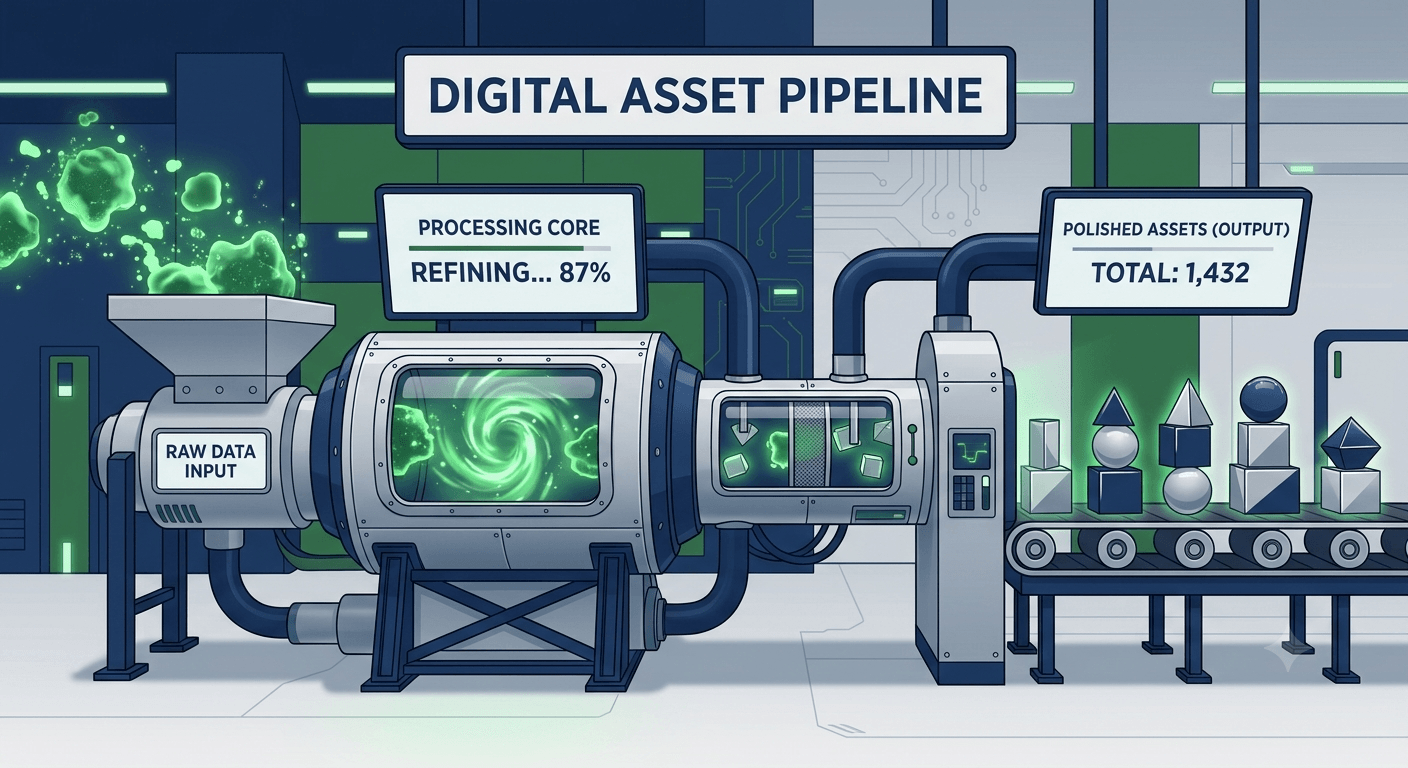
The intelligence layer resolves this contradiction structurally. This essay's claim: CSR skilling — and the corporate social spending around it — should be rewired into what this series has built everywhere else: a verified, outcome-measured, capability-graph-driven talent pipeline, where the company's social mandate and the company's hiring need fund the same machine.
Why CSR Skilling Underperforms Its Budget
Four structural defects, all familiar in form from earlier essays:
Generic content. CSR programs are designed for auditability — hours delivered, cohorts trained — not outcomes. The curriculum is off-the-shelf, undifferentiated by local demand, and dead on arrival in a market where demand shifts in months. The fast-cycle curriculum problem, replicated with philanthropic money.
No verification. Vendor-reported completion is the metric of record; nobody measures capability gained or employment achieved. The CSR system runs on the self-attestation model this series dismantled in accreditation and compliance — and gets the results self-attestation always gets.
Disconnection from the funder's own demand. The company funds skilling somewhere, for someone, toward some market. Its own entry-level vacancies, its suppliers' needs, its sector's capability gaps — none of these structure the program. CSR operates as a parallel universe to the talent function.
And no compounding. Each year's grant is a fresh start: new vendor, new cohort, new generic content. Nothing accumulates — no data, no relationships, no pipeline. CSR skilling is an annuity of outcomes that never compound, in a field where this series' entire thesis is that compounding is the strategy.
The Architecture: CSR as a Talent Pipeline Engine
1. The company's demand becomes the curriculum's spine. The placement-intelligence layer already decomposes the company's actual roles into capability fingerprints; the fast-cycle curriculum engine already converts fingerprints into modules and 20-hour challenges. Wire them together, and the CSR program trains precisely the capabilities the company — and its supplier ecosystem, and its sector peers — demonstrably hire for. The skilling spend stops being generic and becomes specific: this company's verified entry-demand, delivered to learners who can see the destination.
2. The learner pipeline runs on the standard stack. CSR-served learners — disproportionately first-generation, tier-3, and economically constrained, exactly the populations CSR exists for — enter through the capability graph: their actual starting point mapped, their learning path personalised, the AI tutoring layer carrying them without requiring the faculty the program could never afford. The at-risk layer does retention; the daily micro-support does the holding; the verified evidence layer produces graduates whose claims are checkable. CSR cohorts get the same educational machinery this series built for institutions — which means CSR money finally buys quality infrastructure rather than rented contact hours.
3. Outcomes verified, not reported. The verification layer closes the audit gap: capability gains measured by independent instruments, employment tracked through the verified outcome feed, wage data consented and surfaced. The CSR report stops being a narrative and becomes a dashboard — and the company's social spending gains the one thing philanthropy rarely has: proof. This also transforms vendor selection: programs that produce verified outcomes win renewals; programs that produce attendance sheets don't. The market discipline the sector never had, arriving through the procurement function.
4. The conversion bridge: skilling into hiring. Here the two universes merge. The cohort trained on the company's verified demand profile is, functionally, a pre-screened pipeline: candidates whose capabilities are graph-verified, whose challenge work is visible, whose fit is already computed by the matching engine. The CSR program becomes a feeder into the company's own entry-level and apprenticeship hiring — at a fraction of agency cost, with better retention than cold-market hiring, and with the diversity profile CSR mandates exist to advance. The social spend and the talent spend stop being two budgets funding two universes; they fund one pipeline.
5. And the compounding flywheel. Each cohort's outcome data sharpens the curriculum; each hiring cycle's performance data sharpens the demand model; the practitioner-capture layer turns the company's own professionals into the program's currency-injecting faculty at near-zero marginal cost. Year three's program is not year one's repeated — it is year one's improved, with the asset — the pipeline, the data, the relationship — owned by the partnership rather than rented from a vendor.
The Wider Ledger
Run the model system-wide and three lines light up. For the distressed-college tier: CSR becomes a funding channel for the lift infrastructure — the corporation provisioning the AI layer and verified assessment into colleges its supply chains draw from, solving the affordability gap the unaccredited-tier essay flagged. For the learner: the CSR cohort gains what scholarship-only models never provided — a funded path with a visible destination, verified evidence, and a hiring bridge. For the CSR mandate itself: the program becomes the rare intervention that satisfies the statute, the board's impact narrative, the CHRO's pipeline problem, and the CFO's recruitment budget simultaneously — which is why this model survives budget cycles that pure philanthropy never does.
The Honest Caveats
First, guard the mandate's purpose. The moment CSR skilling optimises for the funder's hiring, the pressure arises to serve only the most employable — abandoning the deepest-need learners the mandate exists for. The design must hold both: pipeline cohorts and the equity cohorts, measured separately, funded separately, never traded off quietly.
Second, company-specific pipelines must not become company-specific bottlenecks. Skills trained for one firm's fingerprint should port across the sector — the modular, credit-semantic architecture ensures the capability is the asset, not the relationship. A pipeline that only works inside one company's walls is vocational capture dressed as opportunity.
Third, the verification layer is load-bearing here too. CSR outcomes reported by interested parties will inflate exactly as placement statistics did; independent instruments and consent-gated tracking are the difference between the first honest CSR era and the last dishonest one.
The Bottom Line
Indian corporate India owes the education system thousands of crores a year under the CSR mandate — and has been spending that obligation on programs it cannot measure, teaching content the market has outpaced, to learners it will never meet, while its own recruiters pay premium prices for the same talent the money could have built.
The intelligence layer closes the loop: demand-derived curricula, graph-driven learner support, verified outcomes, and a hiring bridge that converts social spend into the strongest, cheapest, most diverse entry pipeline the company has ever had. CSR stops being a tax paid into a fog and becomes what it always should have been —
the same investment, seen clearly: the cheapest talent acquisition strategy in India, disguised as generosity, and finally funded like it matters.


© VidyaShift 2026

Where Learning Becomes Opportunity.
An AI-native learning-to-employment company.