Curing Baumol's Cost Disease: Why Tuition Rises While Graduate Earnings Stagnate
Excerpt: For 60 years, education costs climbed while graduate salaries flatlined. One economic law explains it — and AI is the first force ever to break it.
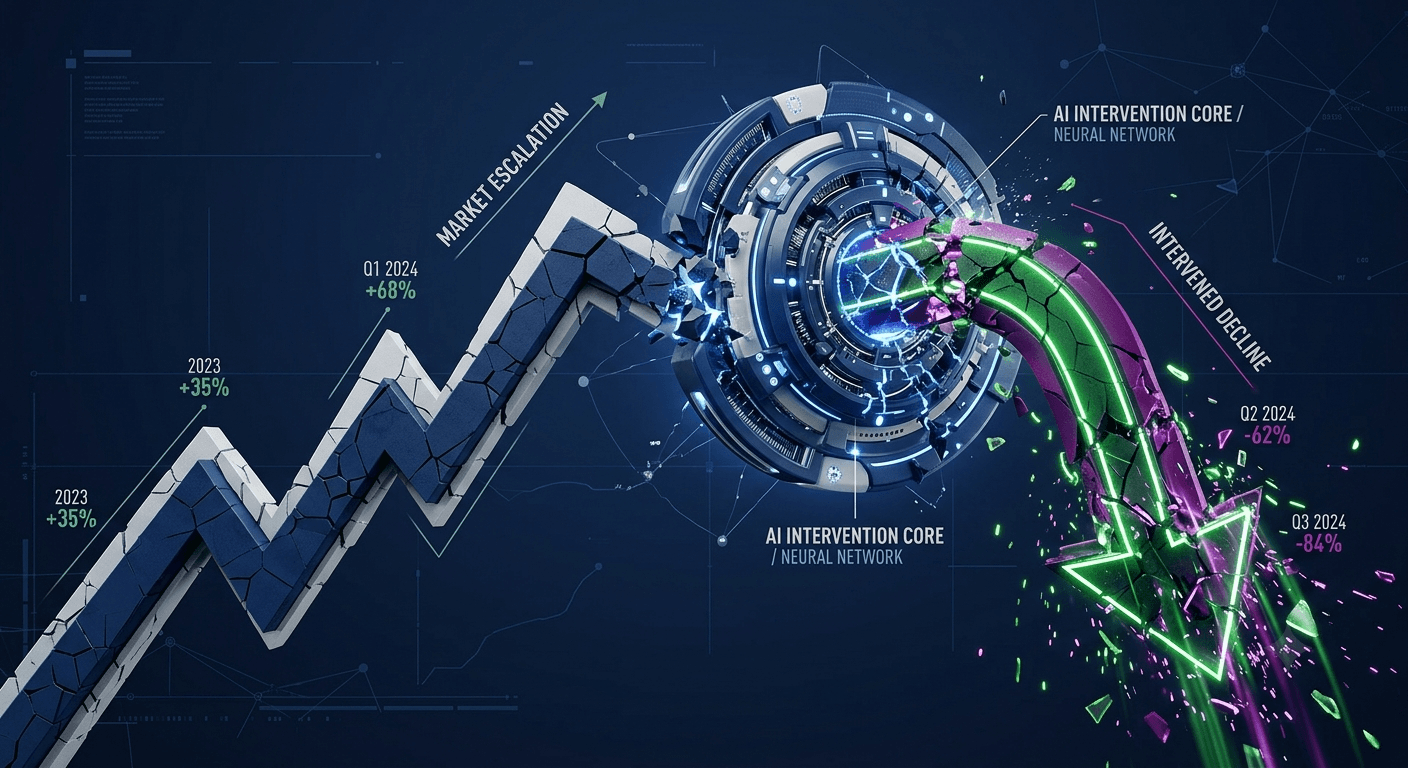
Tuition and fees rising relentlessly, decade after decade, while the earnings premium of the degrees they buy flattens — and in some markets, declines. Families respond by borrowing more. Economists respond by shrugging. Politicians respond by subsidising more.
Nearly everyone misses the actual culprit. Not greed. Not admin bloat alone. Not lazy professors. The real cause is a 60-year-old economic insight called Baumol's Cost Disease — and for the first time since it was identified, there's a genuine cure on the table.
The String Quartet That Explains Your Tuition Bill
In the 1960s, economist William Baumol asked a deceptively simple question: why does a live performance of a string quartet cost vastly more today than in 1800, when the performance itself is identical?
Four musicians. Four instruments. Thirty minutes of Beethoven. Zero productivity gain in two centuries.
But the rest of the economy — factories, farms, software — became enormously productive, and wages rose everywhere. So today's quartet must be paid vastly more to play the same Beethoven. The quartet's cost rises faster than inflation, forever, not because it got worse or lazier, but because it competes for labour with sectors that got better.
Education is the textbook case. A teacher teaching 30 students today performs fundamentally the same job as one in 1960. You cannot batch-produce a Socratic dialogue. You cannot speed up a one-to-one explanation. Teacher salaries must rise with economy-wide wages or nobody becomes a teacher. The conclusion is brutal: education's cost per student rises faster than inflation permanently — by structural necessity, not by anyone's choice.
Why Graduate Earnings Stagnate
Now connect this to the other half of the title. If costs rise 4–6% annually by structural law, but graduate salaries track the brother economy — where productivity gains are real but unevenly distributed — the two lines must eventually diverge.
That's exactly what we see. The college earnings premium, while still positive, has stopped growing in many markets. In India, engineering graduate starting salaries have been nearly flat for a decade — ₹3.5–4.5 LPA for the median private-college graduate — while private college fees multiplied several times over. In the US, the same pattern: tuition up over 1,200% in four decades, median real wages for degree holders creeping.
The result is the defining economic anxiety of the middle class: the return on investment in education is shrinking not because degrees are worthless, but because the cost curve obeyed Baumol while the earnings curve obeyed productivity. Two different laws, two different trajectories, one widening gap.
Every other sector escaped this trap by raising productivity — more output per hour of expensive human labour. Education couldn't. Until the constraint itself changed.
The One Condition Baumol's Law Requires
Baumol's disease has a hidden condition buried in the maths: it only holds if productivity genuinely cannot improve. The quartet must play Beethoven at Beethoven's speed. The teacher must teach at teaching's speed.
The entire cost crisis exists inside that assumption.
Every "fix" proposed over decades failed because it didn't touch the condition: more funding just fed the cost structure; online lectures made content cheap but learning didn't improve, because content was never the expensive part — the interaction was; credential reform shuffled the demand side while the cost engine kept running.
The expensive unit of education was never the textbook or the lecture. It was the responsive human dialogue — the diagnosis of confusion, the adaptive re-explanation, the feedback loop. That dialogue required a human, one per student, whose productivity could never rise. Baumol's law locked onto exactly that.
AI Breaks the Condition
This is why the current moment is categorically different from every past edtech wave. For the first time, the genuinely expensive unit — the adaptive tutoring dialogue — can be performed by software.
An AI tutor can diagnose why a student's answer is wrong, trace the misconception to its root, re-explain in a different way, check understanding, and repeat infinitely — the exact interaction that previously required a human per student. It does this in any language, at any hour, with a marginal cost near zero.
When the highest-cost input becomes software, productivity in education rises for the first time in history. And when productivity rises, Baumol's law loses its grip. The evidence is arriving fast: a Harvard study found students learned more physics from a well-designed AI tutor than from an active-learning classroom. A World Bank pilot in Nigeria produced learning gains equivalent to years of schooling in six weeks, at a cost that was a rounding error against teacher salaries.
The economics inversion is stunning: the best teaching method known to science and the cheapest delivery mechanism are now the same thing. Quality and cost, which moved together for all of history, can finally move in opposite directions.
The Honest Caveats
Three warnings before declaring the disease cured.
First, technology creates the possibility of abundance; institutions decide whether it's delivered. Universities can happily charge premium prices for an AI wrapper. Without transparency and competition on outcomes, savings get captured as margin, not passed on. Baumol's law is an excuse — rent-seeking is a choice.
Second, the human layer is Baumol-immune but essential. Motivation, mentorship, belonging — these human tasks can't be automated and shouldn't be. The winning model concentrates human effort exactly where machines fail, which multiplies human impact without multiplying headcount.
Third, some cost growth isn't Baumol at all. Regulatory scarcity, prestige arms races, and capitation-style pricing are policy failures. AI won't fix what policy broke; it just removes the last respectable excuse for it.
The Bottom Line
For 60 years, the arithmetic was fixed: education quality was rationed because education productivity was frozen. Costs rose by law, graduates' earnings rose by a different law, and families absorbed the difference with debt and sacrifice.
The law has been repealed — conditionally. The interactive dialogue at the heart of teaching is now scalable software at near-zero marginal cost. What remains is a distribution question, not a technology question: whether the productivity windfall gets passed to students as lower prices and wider access, or captured by institutions as margin.
Baumol died in 2017, his disease still raging. The cure arrived a few years too late for him.
It's not too late for the next generation of students — and their parents' bank accounts.


© VidyaShift 2026

Where Learning Becomes Opportunity.
An AI-native learning-to-employment company.