Structured Daily Support: How Micro-Interventions and Small Conversations Bridge the Capability Gap
Excerpt: Education saves its attention for the big moments — the lecture, the exam, the counselling session. But capability is actually built in the forgotten minutes between them: the two-minute check-in, the one-question nudge, the daily conversation nobody schedules. Small, daily, and structured beats big and rare. Every time.
Here is the pattern hiding inside every large educational intervention ever studied:
It works for a while, and then it doesn't.
The inspiring orientation week fades by October. The transformative counselling session is forgotten in eleven days. The remedial bootcamp's gains decay over one vacation. The motivational seminar that had the whole batch buzzing on Friday is indistinguishable from never having happened by the second internal test.
The pattern has a name in learning science — the forgetting curve, the decay of un-reinforced change — and an uncomfortable implication: the human mind does not retain interventions. It retains rhythms. A single powerful event, however well-designed, deposits something the brain classifies as an episode — and episodes get filed away. What rewires capability is not intensity but frequency: small inputs, repeated daily, at the moment of relevance.
This is the quiet revolution now possible in education: structured daily support — the deliberate engineering of micro-interventions and small conversations into the texture of every learning day. Not a new programme added to the institution. A new unit of care: the two-minute interaction, deployed at scale by the intelligence layer this series has built, delivered by machines at zero marginal cost and by humans at the moments where only humans work.
The Case Against the Big Event
The traditional institution's support model is episodic by architecture: the lecture (a 55-minute intervention, three times a week), the term-end review, the annual parent meeting, the crisis-triggered counselling. Between these events — which is to say, 95% of the learner's actual life — the system is silent.
Three consequences follow, and each is measurable:
Decay between episodes. Herman Ebbinghaus mapped it in the 1880s: unreinforced learning collapses steeply within days. The lecture's content, unvisited for a week, is more than half gone. Every semester system quietly fights the forgetting curve with a weapon — the cram cycle — that guarantees the war is lost: material is revived the night before the exam and evaporates the morning after.
Problems discovered late. The daily friction — the confusing concept from Tuesday, the doubt too small to raise, the demoralisation of one bad quiz — accumulates invisibly until it is either a crisis (the at-risk dashboard's flag) or a habit (silent withdrawal). Small problems are cheap to fix and expensive to ignore; the episodic system ignores everything until it is big.
And the absence of being seen. The deepest deficit is not academic. Learners — especially first-generation learners, hostel learners, the anxious ones from the behavioural-alignment essay — run on the daily evidence that someone notices them. A system that speaks only at scheduled events teaches, with every silence, that its attention is conditional and scarce. Motivation research is blunt on this point: felt frequency of support matters more than total quantity of support. Three two-minute conversations a week outperform one forty-minute session a month — not slightly, but structurally.
The Micro-Intervention: Anatomy of the Two-Minute Unit
What counts as a micro-intervention? The unit is defined by four properties:
Triggered, not scheduled. It fires at the moment of relevance — right after a failed attempt, the morning after an absence, when a streak is about to break, when the learner's data shows the exact moment confusion typically hardens into avoidance.
Small enough to never be postponed. Two minutes. One question, one worked hint, one nudge, one sentence of recognition. The design bar is brutal and clarifying: could a tired learner doing this at 11 PM complete it? If not, it isn't a micro-intervention; it's homework with good marketing.
Connected to the learner's actual thread. Not generic content — your mistake from yesterday, your project's next step, your stated goal. The intelligence layer makes personalisation free; a micro-intervention that could have been sent to anyone is a notification, not a support.
Part of a sequence. The micro-unit derives its power from architecture: spaced repetition (the daily five-question review that defeats the forgetting curve), streak mechanics (momentum preserved), escalating challenge (the 20-hour loop compressed into daily beats), and progressive conversation (the same mentoring thread, continued in fragments, day after day).
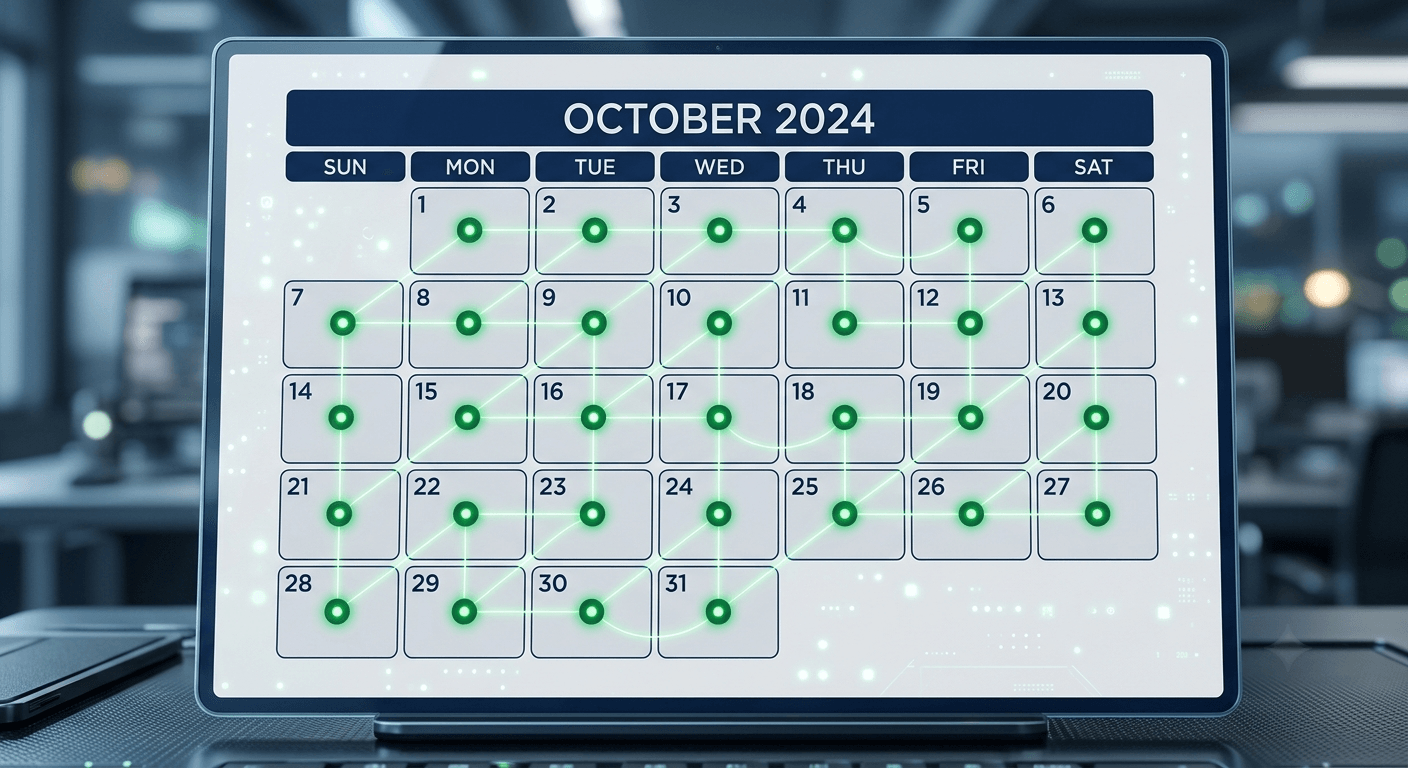
Deployed through the AI layer, the economics are revolutionary: tens of thousands of learners, each touched daily, each differently — at a marginal cost near zero. The AI tutor's daily check-in, the personalised practice set, the two-question warm-up before class, the end-of-day reflection prompt, the streak rescue message. None of these is individually impressive. The compounding is the entire point: five micro-touches a day, 200 days a year, is a thousand personalised interventions per learner per year — a support volume no human institution has ever come close to delivering, delivered inside the moments where learning actually happens.
The Small Conversation: The Human Micro-Intervention
Machines carry the volume; humans carry the meaning. But the human side of daily support has the same design law — frequency beats intensity — and it produces a practice institutions have never formalised: the small, structured conversation.
Not the annual mentoring session that everyone dreads and no one prepares for. The two-minute corridor check-in with a script: "How did the retry go? You were stuck on this Thursday." The AI layer briefs the mentor the way the practitioner-hybrid essay described — each learner's current thread, one data point, one suggested opening line — so a meaningful micro-conversation costs the mentor nothing in preparation and the learner nothing in re-explaining. The dashboard's weekly queue becomes daily rhythm: three check-ins before lunch, each one backed by data, each one evidence to the learner that the system's attention is real.
The psychology here is not soft; it is load-bearing. A daily two-minute conversation is the delivery vehicle for every intervention in this series that requires a human moment: the anxiety protocol's "I noticed, I'm here"; the rescue thesis's morale repair; the early-warning system's care-framed flag. The big conversations only work when the small ones have built the relationship that makes hard truths hearable. Trust is compounded in minutes, not manufactured in sessions.
And the sequence runs both ways: the micro-conversation feeds the data (a two-minute chat surfaces the family crisis no dashboard could see), and the data sharpens the next conversation. The loop is the at-risk intervention, made preventive and daily — catching problems while they are still sentences rather than semesters.
What Compounds
Run the arithmetic on a year of structured daily support and the aggregate is staggering in the most literal sense:
A thousand personalised interventions per learner. Three hundred small human conversations per cohort-mentor pair. The forgetting curve defeated by daily spaced review; the motivation valley crossed by daily wins; the at-risk signals caught at their first whisper; the anxiety protocol rehearsed in daily micro-exposures; the capability graph filling in through daily evidence instead of term-end exams.
Individually, each touch is almost embarrassingly small. Collectively, they constitute the difference between an institution that hosts learning and one that accompanies it. And the ROI claim is modest and verifiable: the entire layer runs on infrastructure this series has already built — the AI tutor, the dashboards, the learner graph, the mentor network — with the only new work being the design of the daily rhythm itself.
The Honest Caveats
First, micro-interventions can degenerate into notification spam. The failed version is already familiar: the edtech app's ten daily pings, swiped away, muted, uninstalled. The discipline is a per-learner budget — few touches, each one demonstrably relevant — with the learner controlling frequency and channel. A micro-intervention earns its place by being wanted; the moment it is endured, it is dead.
Second, simulated care is worse than no care. Learners detect template warmth instantly, and an AI check-in that pretends a human sent it destroys the trust the whole layer runs on. The design must be honest by construction: machine touches are visibly machine — efficient, personalised, unsentimental — and human touches are genuinely human. The hybrid works because each side does what it is; it collapses when either side impersonates the other.
Third, the mentors must actually have the minutes. Daily structured support fails silently if it is layered onto mentors already at capacity — the two-minute check-in becomes a two-second rubber stamp. This layer consumes the faculty-leverage dividend from earlier in the series: the AI absorbed the repeatable labour precisely to buy these minutes. If the minutes get recycled into more admin instead, the entire architecture has failed its purpose.
The Bottom Line
Education has always organised its care the way it organises its teaching: in big, scheduled, institutional units — lectures, exams, annual reviews, crisis sessions. The unit was chosen for the institution's calendar, not the learner's brain, and the cost is paid daily: decayed content, discovered-late problems, and a million learners who never once felt noticed by the systems preparing them for life.
Structured daily support inverts the unit: small, triggered, personal, and relentless — thousands of micro-interventions a year per learner, carried by AI at zero marginal cost, punctuated by small human conversations that turn data into felt support. Not a new programme. A new texture — the daily rhythm that makes every other intervention in this series stick.
The big moments were never where capability was built.
It was built in the minutes between them — and for the first time, education has learned to show up there


© VidyaShift 2026

Where Learning Becomes Opportunity.
An AI-native learning-to-employment company.