AI for Institutional Quality Assurance
Excerpt: Quality assurance in Indian higher education is an audit on paperwork — inspected once every few years, gamed seasonally, blind between visits. AI turns QA from a scheduled ritual into a living system: every course, every teacher, every outcome, measured continuously.
Every few years, an Indian college receives the visit.
Word arrives weeks in advance. Committees form. Files are reconstructed — attendance registers perfected, syllabi "covered," outcome records backfilled with a diligence no actual semester ever possessed. Walls are painted, labs are staged, students are briefed on what to say. The peer team arrives, spends two days, sees the production, writes its report. The institution earns its grade — and then, the morning after, returns to whatever it was doing before the paperwork began.
This is quality assurance in Indian higher education: a periodic performance, verifying documents about education, long after — or long before — any education occurred. The NAAC grade measures an institution's ability to prepare for NAAC. Between visits, the accredited quality and the lived quality can diverge without limit — and they do, across thousands of institutions, for years at a time.
The deeper failure is architectural: QA is built on episodic, self-reported, output-blind inspection — the wrong instrument, the wrong frequency, the wrong evidence. The irony is that no industry on earth would accept this model for any other product. We do not certify pharmaceutical factories by visiting them every five years to read their diaries; we monitor the output continuously, because quality is a property of process, and process can only be known in real time.
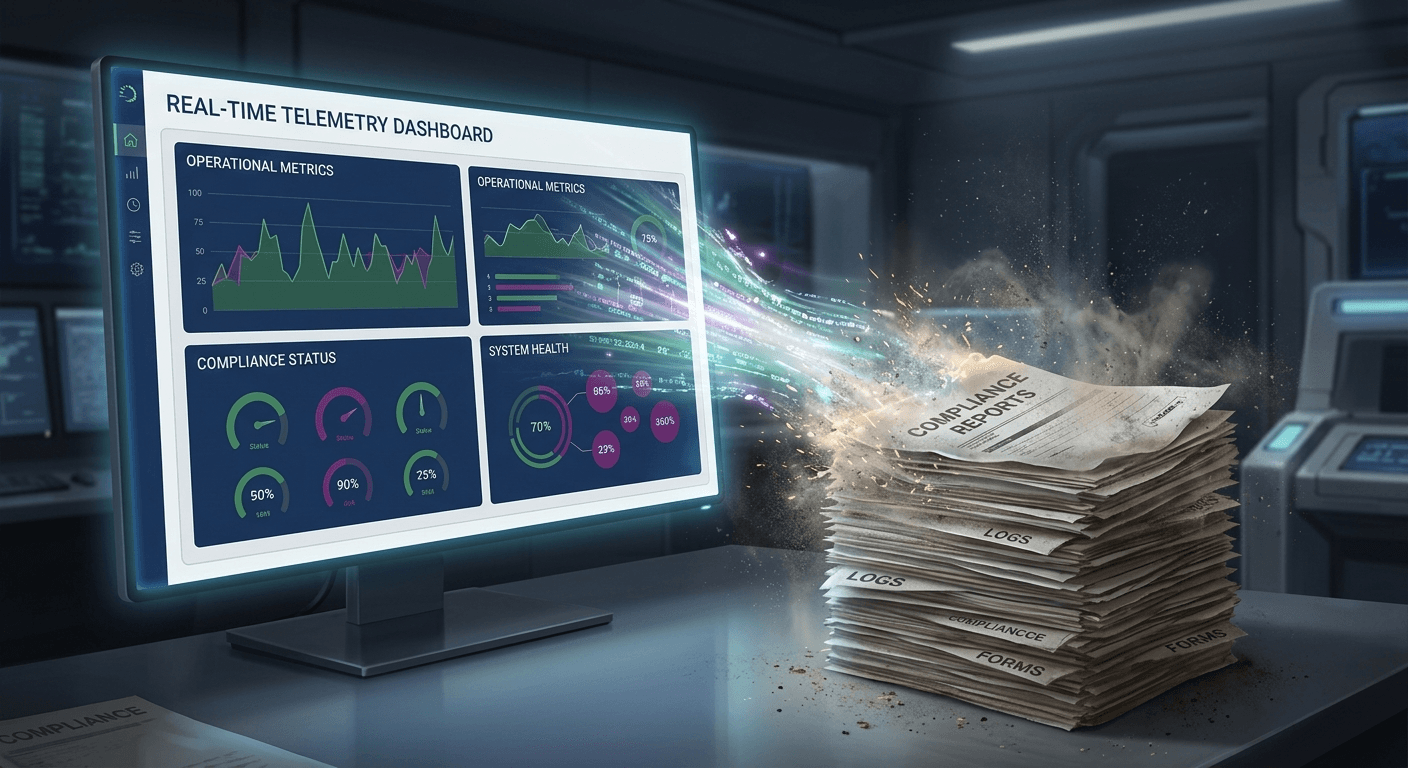
Higher education now generates, for the first time, the continuous process data that real QA requires. The learning systems this series assembled — the AI layer, the capability graph, the outcome intelligence — are simultaneously the world's most complete quality telemetry. Every logins, every mastery check, every grade, every placement is a measurement of whether the institution is actually doing what its prospectus claims. This essay is about wiring that telemetry into a new QA discipline: continuous, evidence-based, gaming-resistant institutional quality assurance — quality as a property the system proves daily, not a costume it dons for visitors.
Why Paperwork QA Cannot Be Fixed
Four structural defects make the current model unfixable from within:
It verifies inputs, not outcomes. NAAC and affiliates inspect syllabi, staff ratios, infrastructure, files — proxies that describe what an institution has, never what its learners became. An institution can hold every credential of quality and graduate the unemployable; the audit never checks. Outcome data — actual learning gains, actual placements, actual employer satisfaction — is the one category the model barely touches.
It samples years in days. A two-day visit assesses five years of operation. Whatever isn't staged for the visit is invisible; whatever is staged is verified. The information asymmetry between inspector and inspected is total — and every seasoned institution has learned to work it.
It is self-reported at the source. The data underpinning accreditation flows from the institution's own offices. The system, in effect, asks the student to grade themselves — and grades itself accordingly.
And it costs the wrong things. Months of faculty labour per cycle are spent manufacturing compliance artefacts — the same misallocation the leverage essay diagnosed, burning scarce teaching hours to produce paper nobody will ever read again. Meanwhile, real quality problems — the vacant-seat churn, the dead specialisations, the absent mentors — are beneath the audit's resolution entirely.
The conclusion is the same one quality engineering reached in manufacturing seventy years ago: inspection after the fact cannot produce quality. Only monitored, corrected process can. Education now has the sensors.
The Architecture: Continuous, Evidence-Based QA
Lay the series' stack against the QA function and it becomes a living audit — three layers deep:
Layer 1: Learning telemetry — is education actually happening? The AI layer's logs are the process record no visit can fake. Engagement curves per course and per section. Mastery-check pass rates per concept, per teacher, per campus. The distribution of doubt-questions (a course generating no questions is not a well-understood course — it's an abandoned one). Feedback latency: how long before a learner's work gets a response. Assignment authenticity signals. These are the vital signs of an institution, streaming daily — and they are game-resistant in the way paperwork is not, because faking engagement data requires actually creating engagement, which is the goal itself. This is QA's beautiful property when built on learning systems: the audit trail and the product are the same artefact.
Layer 2: Outcome verification — what did learners become? The capability graph and outcome-intelligence discipline convert QA's empty acronym — "outcomes" — into measured fact: verified skills at graduation, employer-side hiring and performance data, wage trajectories, the at-risk system's rescue rates. The verification layer matters doubly here: independently assessed capability data cannot be inflated by the institution being audited. When outcomes are measured by the same trustworthy instruments across institutions, comparison becomes honest — and honest comparison is the one force accreditation has never actually exerted.
Layer 3: The quality flywheel — does the institution improve itself? The highest form of QA is not detection but self-correction. The same loop this series built for curriculum (outcome data → flagged modules → semester release) and for teaching (engagement telemetry → coaching, not punishment) is the continuous quality system. The AI layer drafts the accreditation self-study automatically — from real data, which paradoxically makes the report more honest, because fabricating a year of fake telemetry is harder than fabricating a year of files. QA stops being a cost centre performed for visitors and becomes management's own dashboard, used daily because it pays daily.
Under this regime, the external audit inverts its role: instead of inspecting paperwork for two days every five years, the accreditor certifies the telemetry — verifying that the measurement instruments are sound and the data is unmanipulated — and then reads the institution's quality the way one reads a public dashboard: continuously, for everyone to see.
What Changes for Each Player
For regulators: oversight finally scales to a system of 1,000+ universities and 50,000+ colleges — a population no visit-based model could ever cover honestly. Continuous telemetry plus instrument certification reaches every institution, every year, at administrative cost that falls rather than rises. Blatant failure — the college teaching nothing — shows in the data within a semester.
For institutions: quality becomes a competitive asset with a price. Verified outcome dashboards feed the brand engine this series described — the college that can prove its learning gains and placements recruits against the one that only claims them. Good institutions, long flattened by a grading system that couldn't distinguish them from well-painted mediocre ones, finally separate.
For learners and families: the choice of college — currently made on branding, cut-offs, and hearsay — gains an evidence base. A family in a tier-3 town can see, before paying, what this institution's verified outcomes actually are. This is consumer protection of the most consequential kind: the purchase of a decade of a young life.
For faculty: the end of the compliance labour tax. The self-study assembles itself; the audit evidence is the teaching itself. Hours return from file-manufacturing to the mentoring the leverage essay bought them.
The Honest Caveats
First, telemetry can be gamed too — differently. Engagement can be manufactured with mandatory busywork; mastery checks can be softened to inflate pass rates. The defence is instrument certification, adversarial spot-audits, and — critically — outcome anchoring: whatever a college inflates internally must still survive the independent capability assessment and the employer-verified hiring data. Anchor the system on measures that are expensive to fake.
Second, dashboard tyranny is a real failure mode. QA data is a proxy, and proxies invite Goodhart's law: optimise the metric and you degrade the thing it measured. Publishing a teacher's engagement scores can become surveillance; league tables can drive ranking-gaming rather than learning. The governance line from the behavioural-alignment essay applies: measurement for improvement first, accountability second, and never the two confused in one instrument.
Third, the transition must be honest about who is measured by what. Institutions serving disadvantaged cohorts with weak incoming learners will show different raw outcomes than selective ones — raw comparison would punish exactly the institutions doing the most value-adding work. The system must measure value-added: the learning gain between entry and exit, not the exit alone. This is both the fairness requirement and the technically correct measure of teaching quality.
The Bottom Line
Indian higher education's quality crisis was never primarily a shortage of standards — the standards documents are eloquent. It was a shortage of observation: a system that inspected paperwork episodically, trusted self-reports, never measured outcomes, and therefore could neither find its failing institutions in time nor reward its excellent ones at all.
AI inverts the epistemology of quality: the learning process now generates its own evidence, continuously, in game-resistant form — engagement, mastery, verified outcomes, employer verdicts — and quality assurance becomes what it is in every mature industry: monitored process, corrected in real time, proven in data rather than performed for visitors.
The painted walls and reconstructed files were a rational response to an inspection that could be fooled.
A system that watches outcomes daily cannot be fooled — and the institutions that thrive under it will be the ones that stop preparing for visits
and simply are, every day, what their grade claims.


© VidyaShift 2026
Where Learning Becomes Opportunity.
An AI-native learning-to-employment company.