The Hybrid Scalability Model: Combining AI-Powered Sourcing with High-Touch Human Coaching
Excerpt: AI finds, filters, and nurtures at machine scale; humans convert, coach, and retain. Neither wins alone — the hybrid model quietly outperforms both.
Every education business in India — coaching institute, university admissions office, skilling centre, edtech company — runs on the same two expensive functions:
Sourcing: finding the right students, among millions, scattered across Tier-1 cities and Tier-4 towns. And coaching: converting interest into enrolment, and enrolment into outcomes, one learner at a time.
For decades, these two functions have been handled by opposite economic logics. Sourcing was solved with scale — hoardings on highways, lead-generation agencies, call centres of 200 agents dialling cold numbers at ₹80 a lead. Coaching was solved with touch — counsellors, mentors, faculty who knew each student's name. One function screamed for automation; the other demanded humanity. And most organisations, forced to choose, got the split exactly backwards: they automated the human part and manualised the machine part.
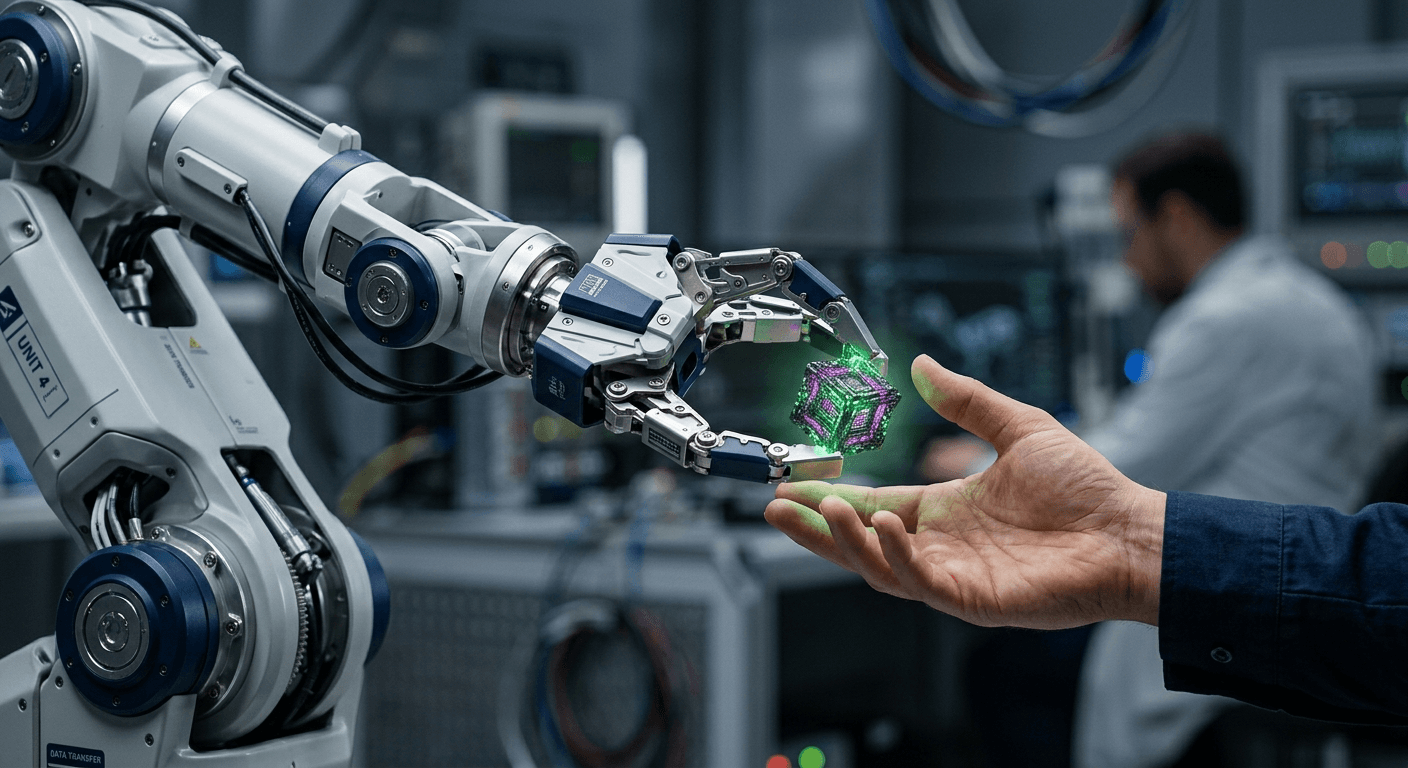
The hybrid scalability model inverts that. Let AI do what AI does best — find, filter, qualify, nurture, and follow up at near-zero marginal cost — and concentrate expensive human attention exactly where it creates irreplaceable value: the conversation that converts, the mentorship that retains, the coaching that produces outcomes. Organisations that get this split right are discovering a compounding advantage: sourcing costs fall while human quality rises.
Where the Traditional Model Breaks
Consider the arithmetic of the conventional admissions funnel at a mid-tier Indian institution or coaching chain.
A lead-gen agency supplies enquiries at ₹200–800 per qualified lead. A call centre burns through them — research consistently shows the majority of education leads are never properly contacted, and most that are, are contacted once and abandoned. Counsellors spend 70% of their time on students who were never going to enrol — wrong course fit, wrong budget, wrong intent — and have no time left for the serious prospects. The institution responds to weak conversion the way the distressed colleges of our earlier essay did: buy more leads. Costs escalate, quality of engagement falls, and the funnel becomes a leaky bucket refilled by increasingly expensive water.
The failure isn't effort. It's allocation. The most expensive humans in the system are doing the least human work — reading scripts at strangers — while the actual relationship-building that drives enrolment and retention is starved.
The AI Layer: What Machines Do Best
The sourcing side of education has quietly become an AI-native problem, because it is fundamentally a problem of scale, pattern recognition, and persistence — three things software does better than any call centre.
Intelligent discovery. AI can map the entire candidate universe — students in a district who match a programme's profile, based on exam data, digital behaviour, and learning signals — rather than waiting for them to walk in. Sourcing shifts from "whoever saw our hoarding" to "everyone we should be talking to, ranked."
Qualification and scoring. Instead of counsellors dialling blindly, AI scores every enquiry on intent, fit, and likelihood to enrol — so the first human conversation happens with the right person about the right programme at the right moment. Response rates on AI-qualified leads routinely run multiples higher than cold lists.
Always-on nurturing. The deepest value of the AI layer: most education decisions take months, and most leads are simply early. An AI nurture engine — in the student's own language, on WhatsApp, answering questions at 11 PM about fees, placements, hostel availability — keeps thousands of prospects warm simultaneously, with infinite patience and zero payroll. Historically, 60–70% of education leads were "lost"; in truth, they were mostly premature — and the machine never sleeps on them.
Prediction and prioritisation. AI flags which enquiries are cooling, which are ready for a counsellor, and which need a different programme altogether — turning the funnel from a batch process into a live dashboard.
The economics are the near-zero marginal cost story from earlier in this series: the ten-thousandth conversation costs the same as the first. Sourcing stops being a volume expense and becomes an intelligence system.
The Human Layer: What Only People Can Do
Here is where the model earns its name — because the hybrid only works if the human layer is genuinely high-touch, not a residual call-centre script.
The conversion conversation. Enroling in a ₹3-lakh programme is a family financial decision, made in a living room, weighed against a dozen alternatives and a hundred doubts. It requires a human who listens, addresses the father's ROI anxiety, and speaks to the mother's safety concerns. When AI has already qualified and briefed the counsellor — this student, this fit, these three concerns — that conversation happens at its highest value moment, and conversion rates climb while counsellor workload drops.
The outcome coaching. Beyond admissions, the human layer is mentorship: the teacher who notices the student's confidence dropping, the placement coach who does the third mock interview, the mentor who calls home when attendance slips.
Trust carrying. In Indian education, enrolment decisions travel through trust networks — parents, relatives, "kisi ko pata hai is college ke baare mein?" Human coaches are the face of that trust. Every genuinely helped student becomes an organic sourcing channel that no ad budget can replicate. The human layer doesn't just retain students; it feeds the AI layer's best input — referrals.
Why the Hybrid Compounds When Either Approach Alone Doesn't
Run the two pure plays to their limits and the failure modes mirror each other.
Pure AI scales beautifully and stalls at trust. Cost per lead collapses, but a fully automated funnel converts poorly on-ticket, high-anxiety decisions — and produces enrolments that churn when no human relationship holds them. Retention, referrals, and outcomes — the metrics that actually decide survival — decay.
Pure human builds deep trust and drowns in scale. Costs rise linearly with every student; coverage thins; counsellors burn out on low-value conversations; growth means hiring armies of average agents.
The hybrid compounds because each layer multiplies the other. AI raises the quality of every human hour (counsellors only meet qualified, briefed, ready prospects). Humans raise the value of every AI-sourced lead (conversion, retention, and referral rates improve, feeding better data back to the machine). The organisation's cost per enrolled, retained, successful student falls even as the human experience per student rises — the same double break we saw in learning itself: ceiling up, escalator off.
The Honest Caveats
First, the AI layer is only as honest as its instructions. Sourcing AI optimises whatever it's told to optimise — enrolment numbers, or student-programme fit. Misaligned incentives produce high-pressure funnels at algorithmic efficiency: mis-selling, faster and cheaper. Institutions that source students into wrong-fit programmes are just automating their doom loop.
Second, "high-touch" cannot become a marketing phrase. If the human layer is one overpaid counsellor per thousand students, calling the model hybrid is fraud with a dashboard. The human ratio, and what humans actually do with their hours, must be measured and protected.
Third, the handoff is where hybrids die. A student passed from chatbot to counsellor who has to repeat their entire story experiences the worst of both. The AI layer must exist for the human conversation — briefing it, never blocking it.
The Bottom Line
The old model spent its most expensive resource — human attention — on its least human task: finding and filtering. The hybrid scalability model reassigns everything: AI hunts, qualifies, nurtures, and remembers; humans converse, convert, coach, and care.
The result is the rarest thing in education economics: a growth model where scaling up doesn't mean dumbing down or pricing up. Sourcing gets infinitely cheaper. Coaching gets deeply human. And each layer makes the other stronger, cycle after cycle.
Machines were never going to replace mentors.
But mentors armed with machines will replace everyone else.


© VidyaShift 2026
Where Learning Becomes Opportunity.
An AI-native learning-to-employment company.