The Anatomy of an AI-Driven Career Rescue Intervention
Excerpt: Careers don't usually fail loudly — they quietly stall, and the person inside them adapts to the stall. A structured rescue protocol, powered by AI diagnosis and human delivery, treats a stuck career like the treatable condition it is.
Meet the profile that Indian education's success statistics never count:
The 2022 graduate who took the only job available — a support role far below her training — and hasn't opened her resume since. The professional with seven years of experience that turns out to be one year of experience repeated seven times, laid off into a market that now wants skills he never needed. The 28-year-old who prepared for an exam for four years, didn't clear it, and now has neither the credential nor the work history — a blank on both sides. The mid-career worker watching AI absorb the exact tasks she was hired to do, earning steadily while her market value silently decays.
None of these people are failures in any official dataset. They're employed, or "preparing," or "between things." But each is in the same condition: a career trajectory that has diverged from their potential and is self-reinforcing in its divergence — skills decaying, confidence eroding, networks shrinking, the gap between what they could do and what they do widening every quarter.
Education systems have no product for this person. Institutions serve prospective students brilliantly and former students not at all; skilling schemes serve the unemployed with generic courses; and nobody at all serves the employed-and-stuck, who are the largest and fastest-growing category as AI redraws work. The career rescue is education's missing intervention — and this essay dissect its anatomy: what a structured, AI-powered protocol looks like when a stalled career is treated like the treatable condition it is.
Why Careers Stall — and Why They Don't Self-Correct
Career rescue begins with diagnosis, and the diagnosis starts with a hard truth: stalls persist because every force in the situation points downward.
Skills decay invisibly. Capability, unverified and unused, erodes without the staller noticing — the marksheet says engineering, the market says five years stale. There is no dashboard on personal capability; decay is only discovered at the moment of needing the skill, when it's too late.
The information environment closes. A working professional outside the hiring loop doesn't know what the market now pays, demands, or screens for. They price themselves by their past, not by the market's present — and typically underprice by enormous margins.
Confidence compounds downward as surely as skills. Every failed application confirms "the market has no place for me"; every year out of learning makes the next course feel more impossible. The stall is psychological as much as economic, and each feeds the other.
And the system offers only blunt instruments. The staller who does seek help gets an MBA (expensive, years, wrong diagnosis), a certification course (content without a strategy), or advice ("network more") — interventions chosen before diagnosis, which in any medical analogy is malpractice.
That's the core insight of the rescue protocol: a stalled career is not a knowledge problem, and content is not the cure. It's a diagnosis problem, a sequencing problem, and a morale problem — and it responds to exactly the machinery this series has assembled: the learner graph, AI diagnosis at near-zero cost, outcome intelligence, and scarce human intervention aimed precisely.
The Anatomy: Five Stages of the Rescue Protocol
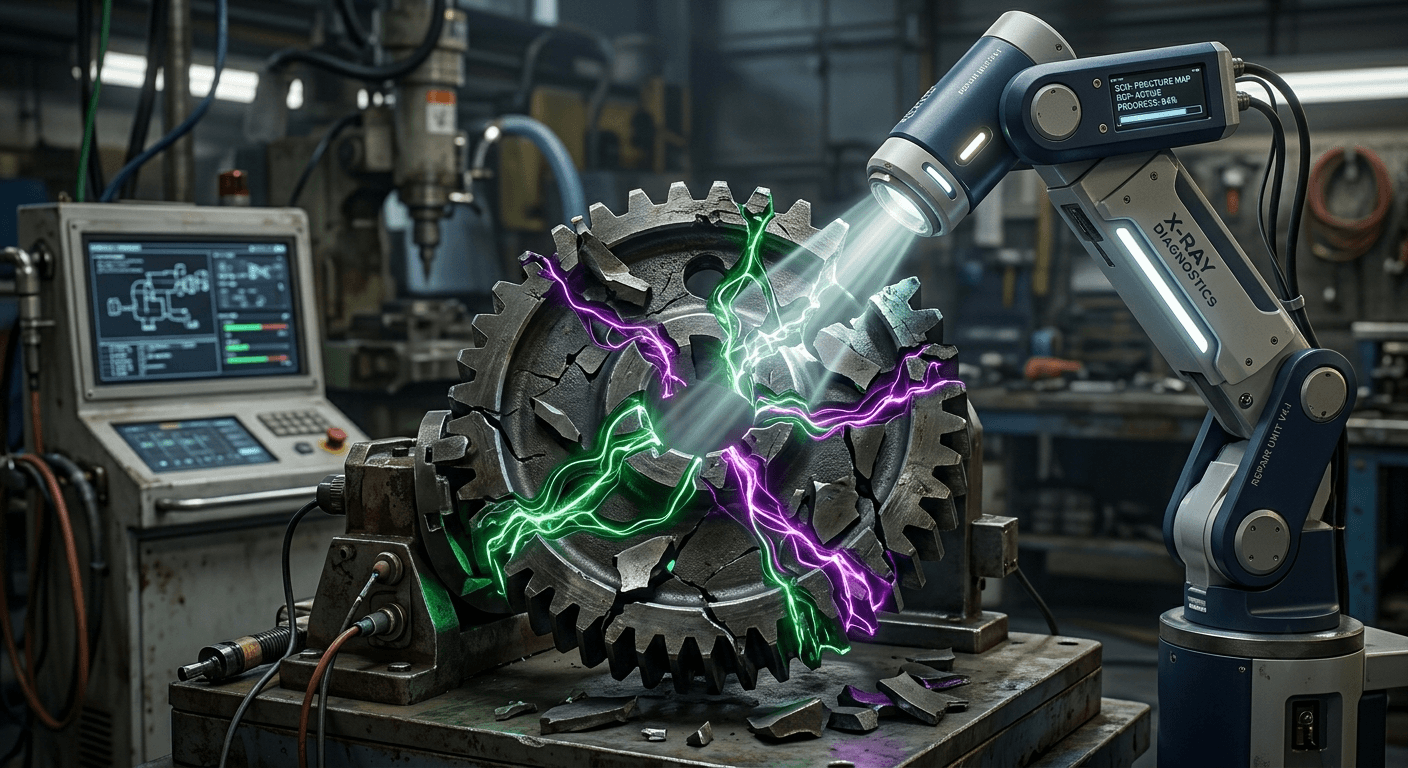
Stage 1: The diagnostic scan. Everything begins with an honest, evidence-based X-ray of the stalled career — the career equivalent of the at-risk dashboard, pointed at one adult. The AI layer assembles: verified current capabilities (tested, not claimed — the resume is not evidence), the decay map (what was once known and has faded), the market position (what the current skill set commands today in live postings and wage data), the constraint profile (financial runway, family obligations, geography, time availability), and the psychological state (motivation, confidence, the specific narrative the person tells about their stall). This scan takes days, not months — and for many it is the first accurate picture of their professional self in years. Often the finding is surprising: the stalled professional is closer to viable roles than they believe — the stall was information, not ability.
Stage 2: The rescue thesis. Diagnosis produces a strategy, chosen from a small set of rescue archetypes the outcome data has validated: reskill (new capability stack for an adjacent market), revalidate (the skills exist but are unverified or unpackaged — build the evidence portfolio, re-enter at higher level), reposition (same skills, different industry, geography, or role-type where they're undervalued), or repair (targeted gap-filling on specific blocking deficiencies). The thesis is chosen before any course is bought — the single discipline the entire skilling industry skips. And it's honest about odds and timelines: "repositioning into GCC operations support: 4 months, 70% placement likelihood at this wage band" is a plan; "upskill in AI!" is a slogan.
Stage 3: The sprint stack. Execution uses the 20-hour challenge architecture: short, outcome-bearing loops, sequenced by the thesis, each producing a verified artefact on the capability graph. Not a two-year programme — a ladder of small wins engineered for a person whose core deficit is motivational as much as professional. The AI layer carries the tutoring, the feedback, the just-in-time theory; every loop closes fast, every artefact is portfolio-grade. Within weeks, the stalled professional is building again — and the identity shift ("I'm someone who builds things") is as much the product as the skills.
Stage 4: Market re-entry, engineered. The predictive-placement go-to-market, applied to one candidate: positioning built on verified evidence rather than the decayed resume; pitch engineered around the diagnostic profile; channels routed to where this profile wins — apprenticeships, returnship pipelines, GCC volume hiring, contract-to-hire routes that forgive timeline gaps. The interview preparation targets the specific failure modes the rescue coach and AI mock-interviews detect. Crucially, the narrative of the gap itself is reframed as evidence — "here's what I built during the transition" outperforms any explanation of absence.
Stage 5: The hold — preventing re-stall. The step every other intervention skips, and the reason most rescues eventually fail. Placement is not the finish line; a re-stalled career is the same condition at a new address. The protocol continues post-placement for a year: AI monitors skill-market drift (the decay dashboard, now permanent), quarterly 20-hour loops keep capability current, and the coaching channel catches the early disengagement signals that predict the next stall — the at-risk dashboard for careers, running continuously. The rescue product is not a job. It's a maintained trajectory.
The Economics — and Why Institutions Should Care
The rescue is also a business model with unusual shape. The customer — a working or recently-working adult — pays for a outcome, and will pay meaningfully for it: this series' intelligence-cycle arithmetic applies directly, with rescue alumni becoming the most loyal lifelong learners and fiercest referrers an institution can have. The AI layer makes the unit economics work: diagnosis, tutoring, and monitoring at near-zero marginal cost, with human coaches concentrated in the moments — the scan debrief, the confidence crisis, the interview — where a human is the intervention. The same infrastructure this series built for students serves the rescue market with a product overlay — one more vertical on the intelligence layer, and arguably the most defensible, because it requires exactly what institutions uniquely have: validated assessment, outcome data, and employer trust.
The Honest Caveats
First, rescue has real limits, and honesty is the product's integrity. Not every stall is rescuable at acceptable cost; some pivots face structural barriers (age filters are real and ugly); the protocol must be able to say "here's the realistic best path" — which may be stabilisation, not transformation. Selling false hope destroys the trust the diagnostic honesty built.
Second, the psychological layer is not decoration. Confidence collapse is load-bearing in every stall; if the AI does the diagnosis and no human delivers the belief, the sprint stack never starts. The coach is not a luxury in this product — it's the ignition system.
Third, AI itself is both the cause and the cure — and must be deployed with that irony acknowledged. The same technologies stalling mid-career workers are the ones that make their rescue affordable. An intervention that rescues people into fragile AI-exposed roles without the permanent-loop maintenance of Stage 5 just schedules the next rescue.
The Bottom Line
Every education system is built for people entering careers. None is built for people stuck inside them — the graduate below their training, the professional made stale by time, the exam casualty with blank years, the worker watching AI absorb their job description. They are millions, growing, and currently served by nothing but generic courses and well-wishing.
The rescue protocol gives them what medicine gives a treatable condition: an honest scan, a diagnosed strategy, a ladder of short verified wins, an engineered re-entry, and a maintenance plan that prevents relapse. AI makes each stage affordable at scale; humans make the moments that decide it.
A stalled career looks, from inside, like a personal failing.
Anatomically, it's an untreated condition — and now, for the first time, a treatable one.


© VidyaShift 2026
Where Learning Becomes Opportunity.
An AI-native learning-to-employment company.